Vinyl roofing in Hallbrook, MO is the material most homeowners mean when they're really asking about PVC membrane for a flat porch roof, garage addition, or sunroom. Hallbrook's mix of steep-slope homes with low-slope additions means many properties have at least one section where this product is a realistic option, even if the main roof is asphalt shingle. Here's what it actually costs installed, how long it lasts, and where it makes sense before you request a quote.
Redemption Roofing & Construction's crews install and repair flat and low-slope roofing sections throughout the Kansas City metro, including Hallbrook. On the tear-offs we've handled locally, failed heat-welded seams, not torn or punctured sheet, account for most of the emergency calls this material generates, which is why installer skill matters more than brand name here.
What Is Vinyl Roofing, and How Is It Different From Vinyl Siding?
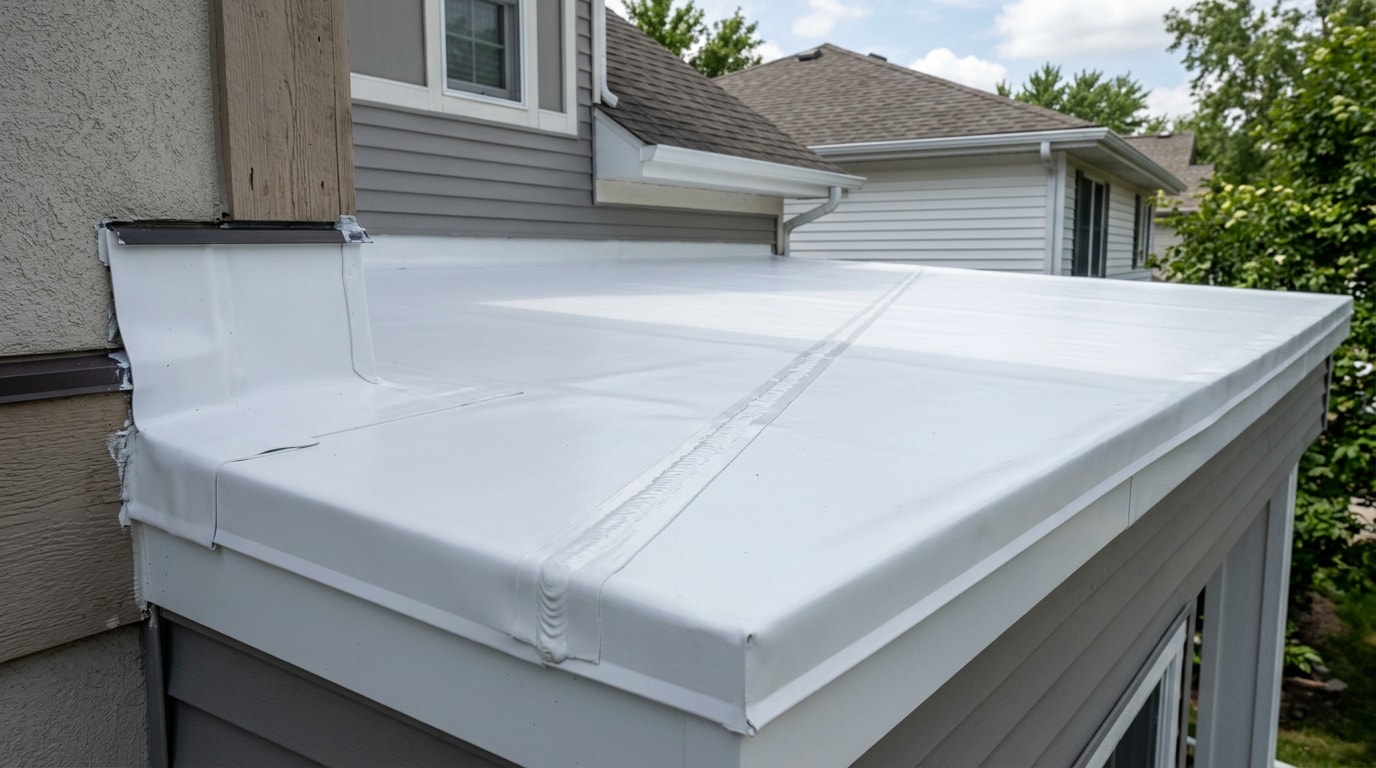
Vinyl roofing, also called PVC roofing, is a thermoplastic membrane made from polyvinyl chloride and reinforced with polyester scrim or fiberglass. It's manufactured as a flexible rolled sheet, heat-welded into one continuous surface, and installed primarily on flat and low-slope roof sections rather than full steep-slope homes.
The product standard manufacturers reference is ASTM D4434. This specification covers flexible fiber- or fabric-reinforced sheet made from poly(vinyl chloride) resin as the primary polymer intended for use in single-ply roofing membranes exposed to the weather. In plain terms, "vinyl roofing" is just the common name contractors and homeowners use for PVC roofing membrane, same material, different label.
Vinyl roofing is not the same product as vinyl siding. The two share a base chemistry but are formulated and installed completely differently, a distinction worth confirming before you start calling installers, since some local contractor sites blur the two terms together. If siding is actually what you're researching, see our vinyl siding installation page instead.
Types of Vinyl Roofing for Hallbrook Homes
Not all vinyl roofing products are built the same way, and the differences matter more than most buyers realize.
- Single-ply PVC membrane is the dominant product and the one most people mean when they say vinyl roofing: large rolled sheets heat-welded together over flat or low-slope decks.
- Rigid PVC panels are a secondary product, typically used on porches, patios, carports, and outbuildings rather than main house roofs.
- Vinyl-coated or vinyl-simulated shingles make up a smaller category designed to mimic traditional shingles on sloped roofs.
| Product Type | Typical Use | Install Method | Cold-Climate Note |
|---|---|---|---|
| Single-ply PVC membrane | Flat/low-slope main roofs, additions | Heat-welded sheets | Stays flexible when properly formulated for the climate |
| Rigid PVC panels | Porches, patios, outbuildings | Mechanically fastened panels | Thin-gauge panels can become brittle in hard freezes |
| Vinyl-coated/simulated shingles | Sloped residential roofs | Nailed, shingle-style | Coating may crack under repeated freeze-thaw cycling |
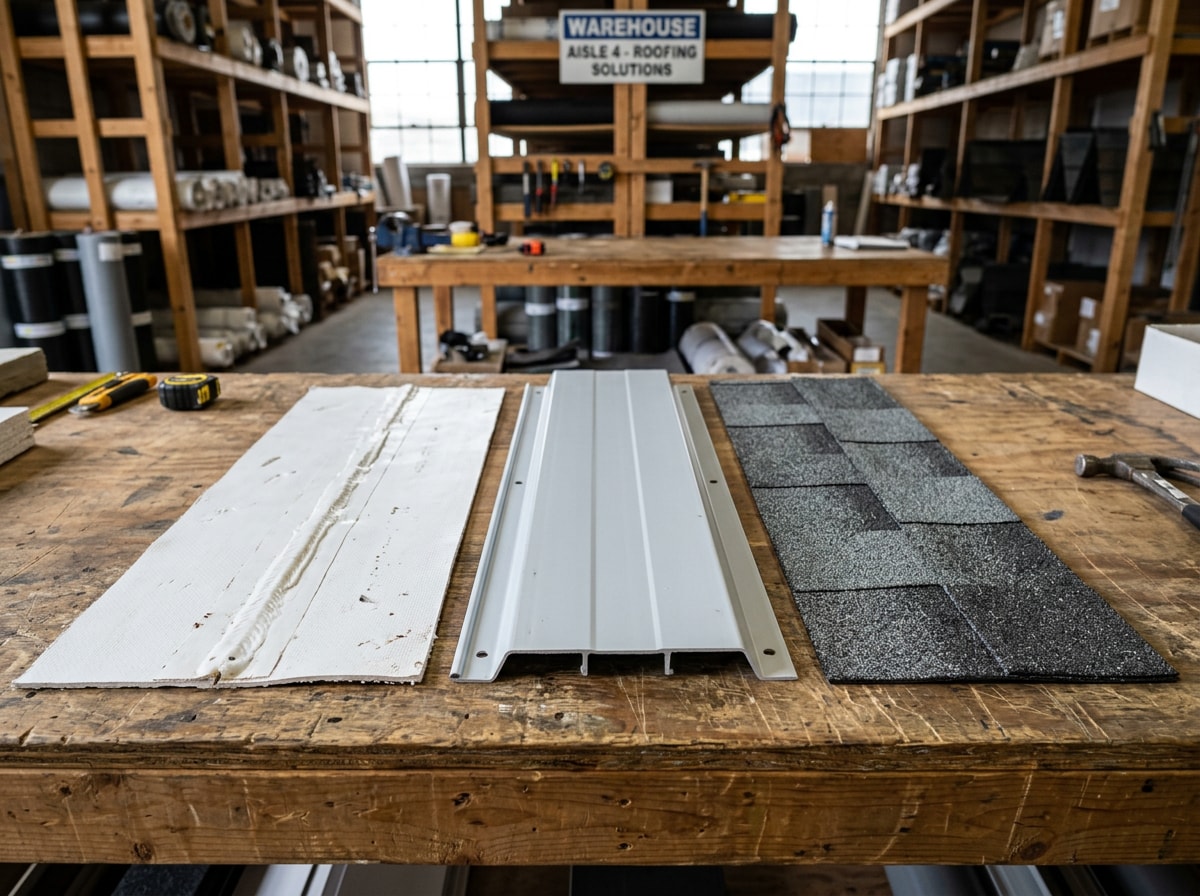
For a typical Hallbrook property, a steep-slope single-family home with a flat porch roof, garage addition, or sunroom, single-ply PVC membrane on that flat section is usually the realistic fit, not a full-roof vinyl shingle replacement. Finding installers experienced with rigid panels or coated shingle products locally can take more searching than finding a membrane crew, so it's worth confirming experience with the specific product before you commit. Homeowners weighing vinyl against a steep-slope alternative often compare it with our aluminum roofing guide for Hallbrook, MO, since both are lighter-weight, reflective options.
If your project involves a true flat roof section, our flat roof repair and flat roof replacement crews work with PVC membrane as a standard part of that scope, alongside broader specialty roof installation work.
How Much Does Vinyl Roofing Cost in Hallbrook, MO?
A PVC membrane roof costs $7 to $12 per square foot installed in 2026, or roughly $10,000 to $22,000 for a typical low-slope roof of 1,500-2,000 square feet. Broader industry planning guidance puts the floor a bit lower: a useful preliminary budget is about $5 to $12 per square foot installed for many PVC roofing projects, with complex roofs or extensive replacement work costing more.
Three factors drive most of the spread in any quote:
- Membrane thickness and attachment method.
Pricing scales with thickness and attachment: 50-mil mechanically attached sits at the $9 to $11 floor, 60-mil mechanically attached is the $10 to $13 commercial standard, 60-mil fully adhered runs $12 to $15, and 80-mil runs $13 to $17 for the puncture-resistance upgrade. Thicker sheets cost more upfront but typically carry longer warranties.
- Insulation and tear-off. Removing an old roof and adding insulation layers under the membrane adds to the total replacement cost, separate from the membrane price itself.
- Access and local labor. A porch roof tucked behind mature trees or a tight side yard in Hallbrook adds crew time regardless of material, which can push a quote above the national range.
For an accurate number on your specific property, request a free roofing estimate rather than relying on a national average. You can also contact us directly to get a measured quote for a Hallbrook address.
How Long Does a Vinyl Roof Last?
A PVC membrane roof typically carries manufacturer warranties of 20 to 30 years, with a well-installed, well-maintained system reaching the upper end of that range or beyond. Industry data from UK roofing manufacturers backs this up on the high side: most membranes have a life expectancy of between 25 and 40 years which is in line with the service life of the building.
How long vinyl roofing lasts in practice depends heavily on one thing: installation quality. Heat-welded seams are the single biggest determinant of long-term watertightness. A seam welded too hot, too cold, or too fast is the most common point of failure, not the sheet material itself, which matches what our own Hallbrook service calls show.
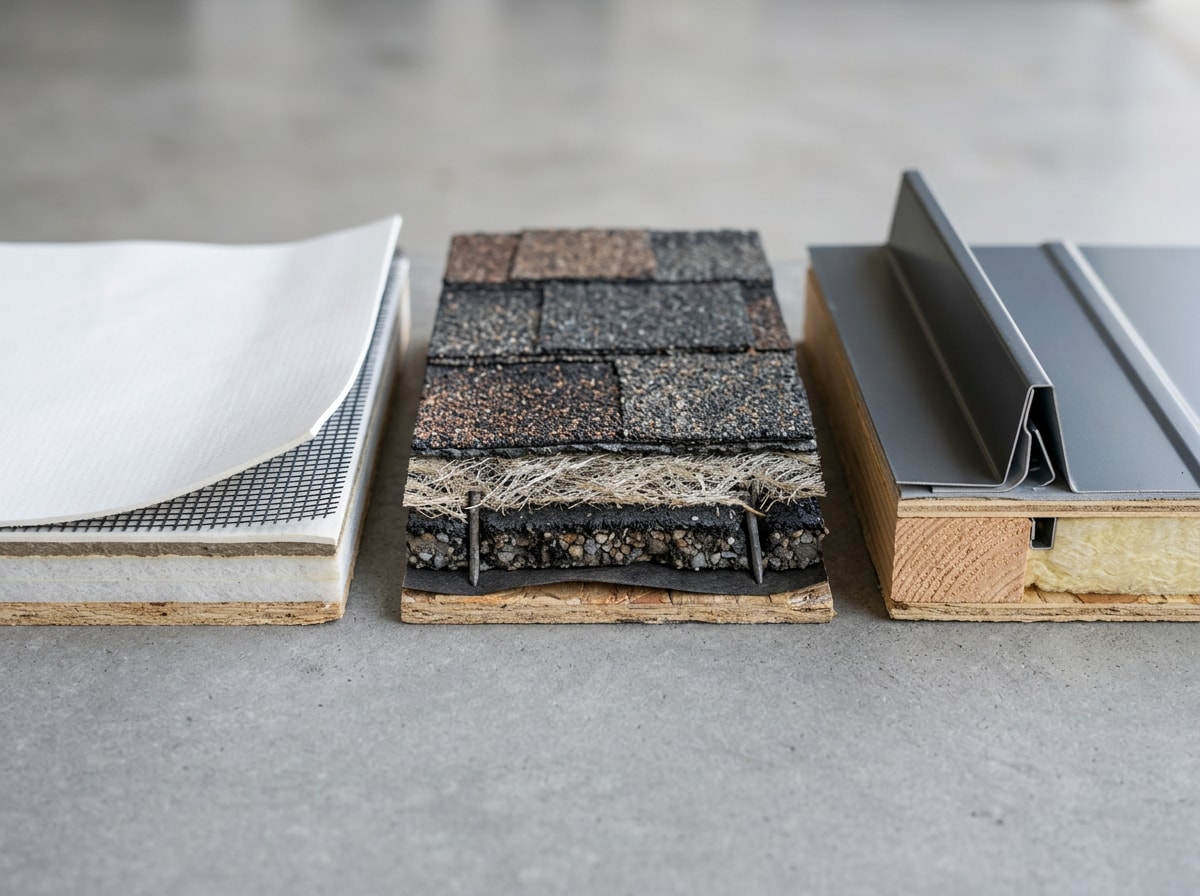
The other long-term factor is plasticizer migration, the slow process by which the chemical additives that keep PVC flexible gradually leach out of the membrane over decades. This affects older-generation PVC formulations more than it affects current ones, but it's worth asking a contractor about when comparing membrane brands.
Is Vinyl Roofing Energy Efficient? What Changed in 2022
Many vinyl roofing products are formulated as white or light-colored membranes that reflect sunlight and reduce heat absorption, which can help lower cooling costs on the flat section they cover. Here's a detail a lot of cost guides skip: the ENERGY STAR label most homeowners associate with reflective roofing no longer applies to roofing products at all. The ENERGY STAR certification program for roofing products officially ended on June 1, 2022, at which point no roofing products in the market are certified to ENERGY STAR by order of the U.S. Environmental Protection Agency.
That doesn't mean reflective roofing performance stopped being measured. The EPA now points homeowners to the Cool Roof Rating Council (CRRC) for product types, and the CRRC maintains an extensive online database of cool roof products and their radiative performance ratings. If a contractor markets a PVC membrane as "ENERGY STAR rated" in 2026, that claim is outdated; ask for its current CRRC rating instead.
Vinyl Roofing Pros and Cons
Vinyl roofing's reputation rests on a few genuine strengths, balanced against real trade-offs worth weighing honestly.
Hot-air welding fuses adjoining sheets into one continuous membrane, and a properly welded seam is generally stronger than the surrounding material itself, a meaningful advantage over materials that rely on overlapping and sealant alone. PVC also resists animal fats, oils, and many common chemicals, which is why it's a standard choice on restaurant and food-service roofs, and a reasonable option for a home with a grease-vented kitchen exhaust nearby. Maintenance is another point in its favor: a vinyl roof typically needs only periodic cleaning rather than regular patching.
| Factor | Vinyl Roofing | Typical Trade-off |
|---|---|---|
| Upfront cost | Higher than TPO or asphalt | Longer-term warranty may offset it |
| Installation | Requires trained welding crews | Fewer local installers for niche products |
| Long-term aging | Plasticizer migration over decades | Slower in newer formulations |
| End-of-life | Technically recyclable | Rarely recycled in practice in the U.S. |
On that last line: recyclability claims around PVC roofing deserve a closer look than most marketing copy gives them. University researchers studying plastic waste have found that PVC has a zero percent recycling rate in the United States in practical, large-scale terms, even though the chemistry is technically recyclable. Industry take-back programs exist for some construction-grade PVC offcuts, but don't assume curbside or municipal recycling will take an old membrane at tear-off; plan for standard landfill disposal through your contractor instead.
Weighed together, vinyl roofing rewards a longer ownership horizon and a well-trained installer more than it rewards shopping purely on sticker price. Before signing anything, it's worth having a roof inspection to confirm your flat section's deck and drainage can support the system you're pricing.
Redemption Roofing & Construction handles this kind of mixed-material project across the Kansas City metro. You can review completed work on our projects page or go straight to {{SITE_URL}} to see the full range of services we offer beyond roofing.
FAQ
Vinyl Roofing vs TPO: Which Is Better?
Neither material is universally better, it depends on the roof and the building's use. PVC membrane generally wins on chemical resistance, which matters for restaurant or industrial roofs, and its heat-welded seams tend to hold up well over decades. TPO usually costs less upfront and remains a popular choice for straightforward residential flat-roof sections where chemical exposure isn't a concern. For a typical Hallbrook porch or addition roof without major grease or solvent exposure, either product can perform well when installed correctly.
Is Vinyl Roofing Recyclable and Good for the Environment?
Technically yes, but don't count on it happening. PVC membrane can be reprocessed, and some manufacturers run limited take-back programs for construction-grade PVC scrap, but actual post-consumer PVC recycling in the U.S. remains minimal in practice. The reflective surface common to vinyl roofing does reduce cooling-related energy use, which is a real environmental upside, but treat broad "eco-friendly" claims about end-of-life recycling with some skepticism until you confirm a specific manufacturer's program.
What Is KEE Roofing, and Is It Worth the Money?
KEE, or ketone ethylene ester, is a PVC variant engineered to resist plasticizer migration better than standard PVC membrane, which helps it stay flexible longer in harsh conditions or under regular chemical exposure. It's worth the added cost if you plan to own the building long term or expect grease, oil, or solvent exposure on the roof surface. For a straightforward Hallbrook home with typical flat-roof needs, like a porch or garage addition, standard PVC membrane is usually sufficient, but ask your installer about KEE specifically when you request a quote.
Can Vinyl Roofing Be Installed Over an Existing Roof?
Sometimes, but it depends on the condition of the existing deck and membrane. A recover job over sound, dry existing roofing can work in some cases, but a damaged deck, trapped moisture, or multiple existing layers usually calls for a full tear-off first. A contractor should inspect the existing section before quoting either approach.
Does Vinyl Roofing Work on Steep-Slope Hallbrook Homes?
Not as a primary roof material in most cases. Single-ply PVC membrane is engineered for flat and low-slope application; it's not the standard choice for a full steep-slope roof replacement. If your main roof is steep-slope, vinyl roofing is more likely to apply to a flat porch, garage, or addition section while the main roof uses asphalt shingle, metal, or another steep-slope material.
Ready to find out what vinyl roofing would cost on your specific Hallbrook property? Get a free estimate and we'll measure the section that actually needs it before you commit to a material.