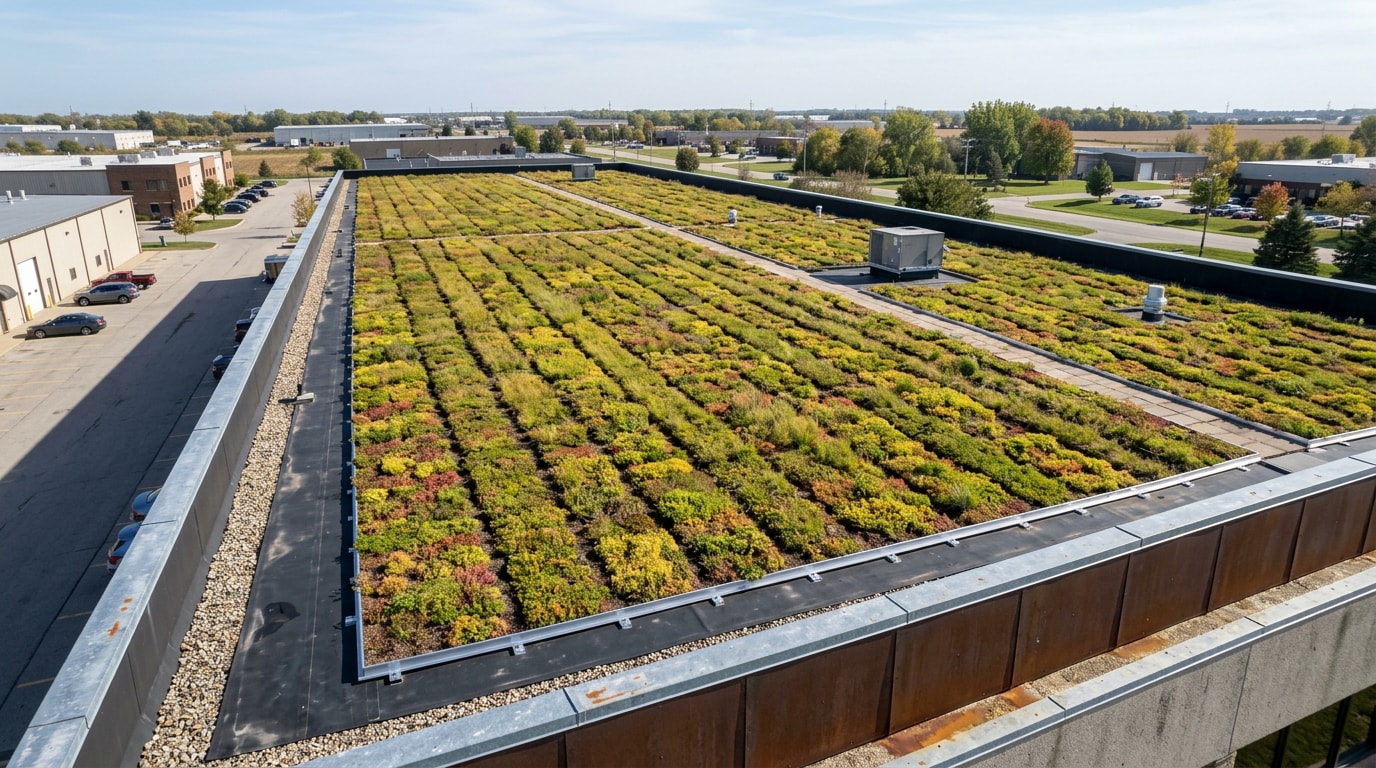
Green roofing in Lee's Summit, MO turns a flat or low-slope rooftop into a planted system that manages stormwater, cuts cooling costs, and extends the life of the roof deck underneath. It works here, but only on buildings that can carry the added weight and only when the layers beneath the plants are installed correctly. This guide breaks down what a living roof actually is, which system fits your property, and what the install process looks like locally.
What Is a Green Roof, Exactly?
A green roof is vegetation planted over a layered system: a waterproof membrane, a root barrier, a drainage layer, and a growing medium. It is not a rooftop planter sitting on top of shingles.
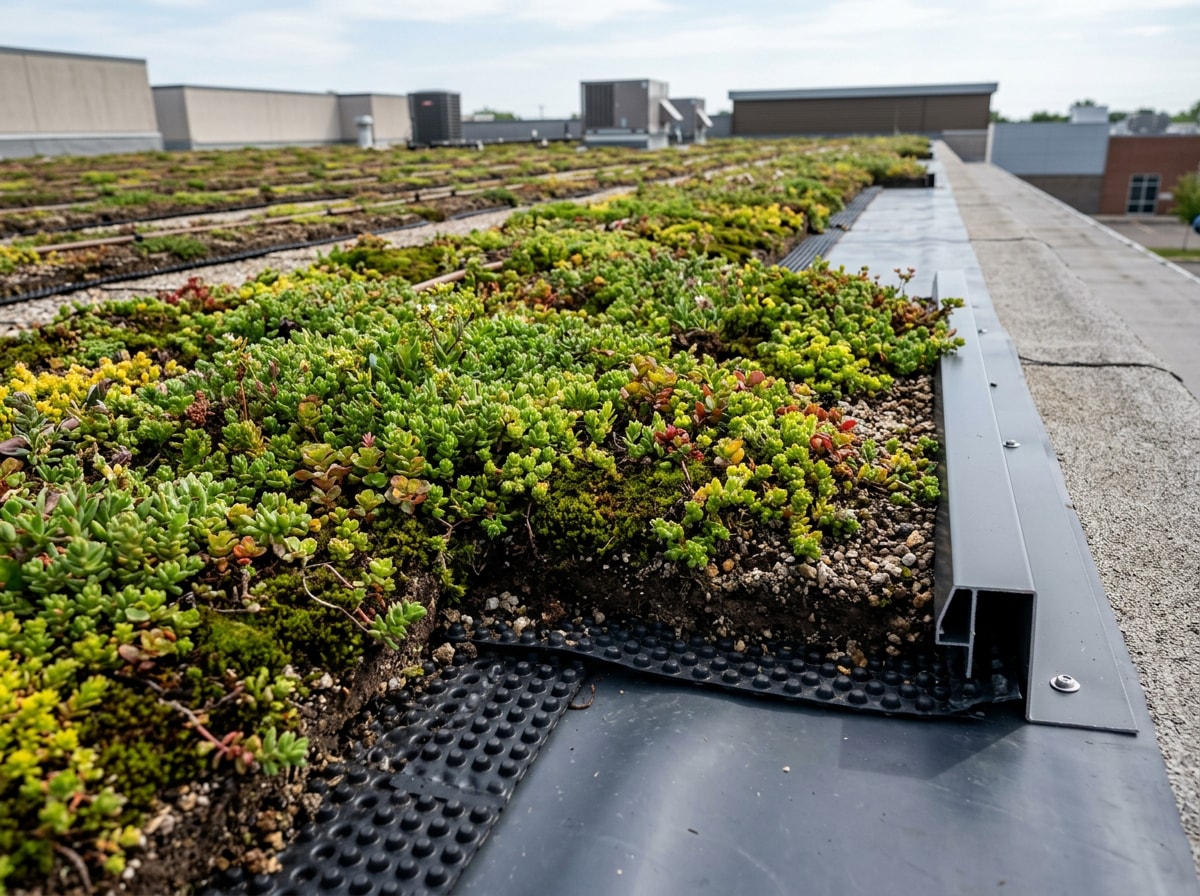
Each layer has a job. The membrane keeps water out of the building. The root barrier stops plant roots from puncturing it. The drainage layer moves excess water off the roof. The growing medium holds the plants and nutrients.
Across the Kansas City metro, interest in this kind of eco-friendly roofing has grown alongside stricter stormwater rules and a push toward sustainable commercial construction, especially on the flat and low-slope roofs common to local retail and office buildings. We work with property owners throughout Lee's Summit, MO evaluating whether their building is a candidate.
Why Green Roofs Make Sense for Lee's Summit Properties
Stormwater Management
Soil and plants absorb and filter rainfall before it ever reaches a storm drain. That matters in a region where heavy spring storms regularly strain municipal systems.
Extensive and intensive green roofs can reduce runoff by 60 to 100 percent, respectively , according to EPA research. That is a meaningful number for any commercial property managing a stormwater detention requirement.
Urban Heat Island Reduction
Concrete, asphalt, and dark roofing materials trap heat and push summer temperatures higher in developed areas. Green roofs are an effective heat island reduction strategy, providing both direct and ambient cooling effects , per the EPA's research on green roofs and heat islands.
Lower Energy Costs
The plant and soil layer insulates the building, keeping interiors cooler in summer and reducing heat loss in winter. Lower HVAC run time means lower utility bills over the life of the roof.
Longer Roof Lifespan
UV exposure and temperature swings are the two biggest causes of early membrane failure. A vegetated layer shields the membrane from both, which is why green roofs routinely outlast conventional systems by decades.
Extensive vs. Intensive Green Roofs: Which Fits Your Building?
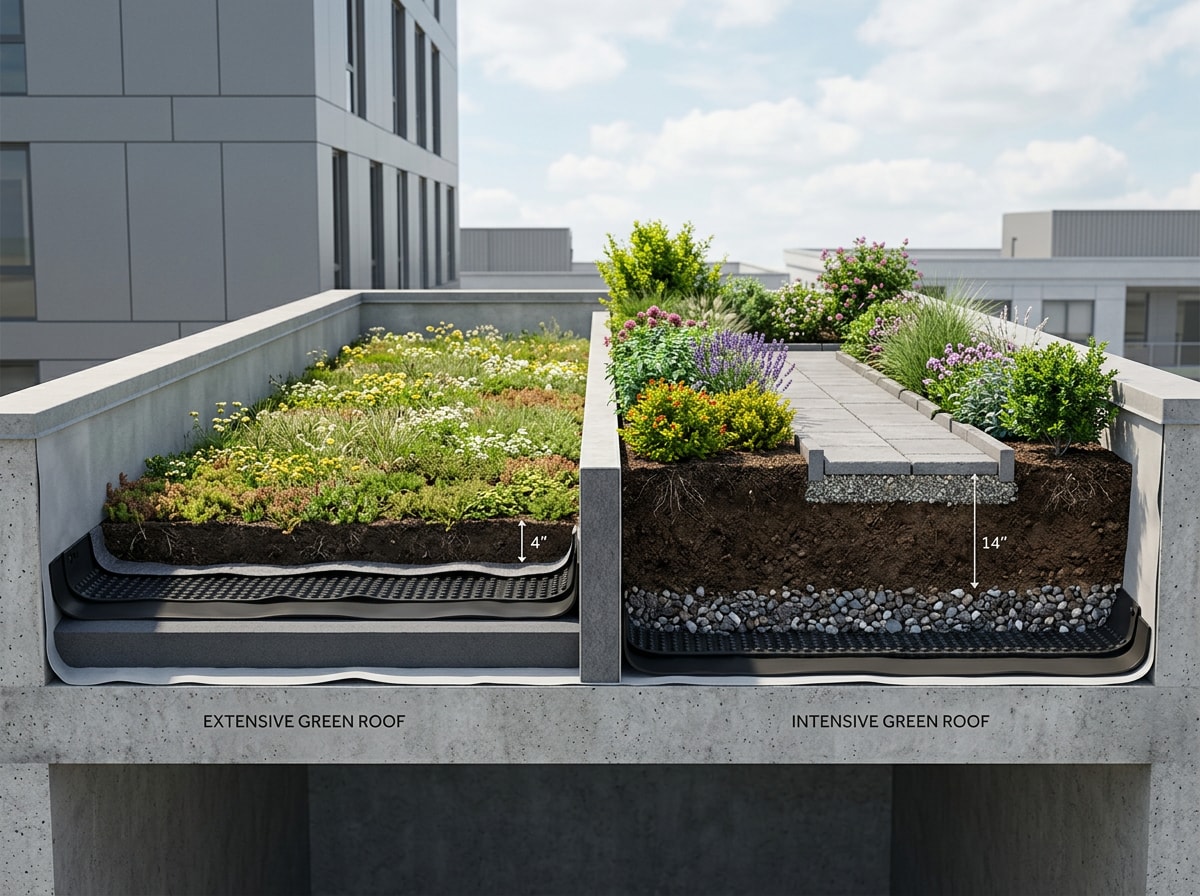
Every green roof falls into one of two broad categories. The right choice depends on structural capacity, budget, and how much ongoing maintenance you want to take on.
| Factor | Extensive | Intensive |
|---|---|---|
| Soil depth | 2 to 6 inches | 12+ inches |
| Added weight (saturated) | ~15 to 30 lb/sq ft | 50 to 300+ lb/sq ft |
| Plants | Sedum, moss, grasses | Shrubs, small trees, perennials |
| Maintenance | Low | High |
| Structural reinforcement | Rarely needed | Almost always needed |
Extensive Green Roofs
Extensive systems use a thin growing medium, usually two to six inches deep, planted with hardy, low-maintenance species like sedum, moss, and grasses. They're lightweight enough to work on most existing roof decks, which is why they're the most common choice for residential and small commercial projects. Local installers sometimes call this a "sedum roof," so know the terms are interchangeable. Once established, extensive systems need minimal irrigation and represent the most affordable entry point into living roofs.
Intensive Green Roof Systems
Intensive systems support a wider range of plants, including shrubs, small trees, and walkable paved areas. The deeper soil layer adds significant weight, so these projects require structural reinforcement and an engineering review before any installation begins. Some contractors market this style as a "rooftop garden," reflecting its more designed, usable feel.
How Green Roof Installation Works in Lee's Summit
Installation starts with a structural assessment. An engineer or roofing professional evaluates whether the existing deck can handle the added weight, both wet and dry, before anything else happens.
From there, crews build up the layers in sequence:
- Waterproofing membrane
- Root barrier
- Drainage mat
- Filter fabric
- Growing medium
- Plants, usually selected with input from a landscape architect
Our crews have assessed low-slope commercial buildings across the Lee's Summit and Blue Springs corridor for green roof retrofits, and the deciding factor is almost always structural capacity, not budget. A roof that passes the structural review is usually a straightforward install; one that doesn't needs a conversation about reinforcement costs before anything moves forward.
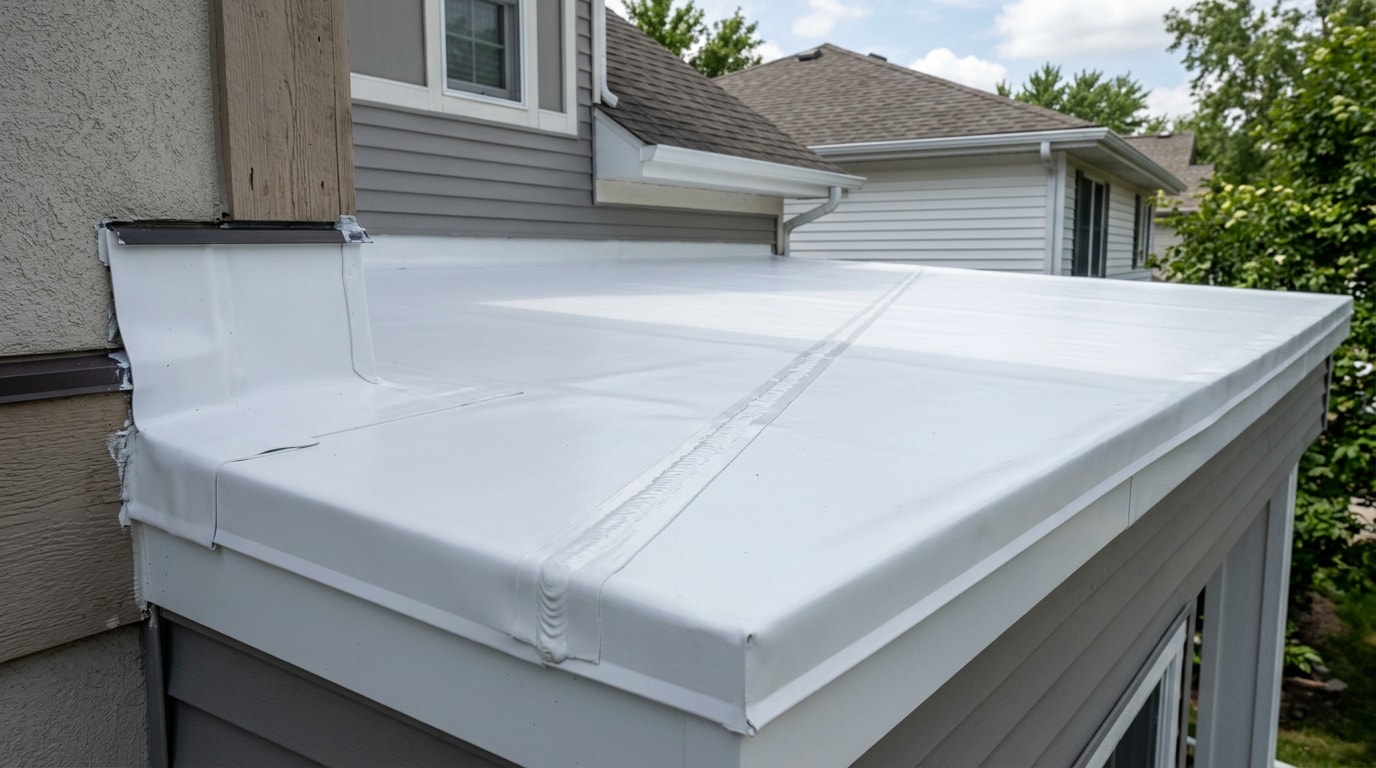
Green roofs sit over flat or low-slope substrates, so if you're unsure whether your roof qualifies, it's worth reviewing our flat roof repair and flat roof replacement services, or starting with a roof inspection to see what you're working with.
Before work begins, check in with the City of Lee's Summit Development Services permit portal. Roofing permits in Lee's Summit route through the CityView Online Portal, and a green roof's added structural load typically triggers plan review in addition to the standard roofing permit.
What Does a Green Roof Cost?
Pricing varies by system type, roof access, and whether structural reinforcement is needed.
| System | Installed cost per sq ft |
|---|---|
| Extensive | $10 to $25 |
| Semi-intensive | $15 to $30 |
| Intensive | $20 to $35+ |
For comparison, the EPA estimates extensive green roof installation costs at about $8.00 per square foot, including materials, preparation, and installation, though this is initially more expensive than installation of a traditional roof at roughly $1.25 per square foot , according to University of Delaware Cooperative Extension. The gap narrows over time as energy savings and extended lifespan offset the higher upfront cost.
Want a number specific to your building? Request a free estimate and we'll walk the roof with you.
Ongoing Maintenance
A green roof is not install-and-forget. Expect:
- Seasonal weeding to keep unwanted species out
- Irrigation checks, especially the first two growing seasons
- Drainage inspections to confirm water is still moving off the roof
- Membrane spot-checks where accessible
For a broader look at what a seasonal roof maintenance plan should cover beyond the vegetated layer, our roofing maintenance checklist for Hallbrook, MO walks through the same inspection cadence that applies to a green roof's underlying structure.
If you'd rather have a professional handle the schedule, our roof maintenance and tune-up service covers the non-vegetated side of the system: flashing, drains, and membrane seams.
FAQ
How long does a green roof last?
Most green roofs last 40 to 50 years, roughly double a conventional roof's lifespan. The vegetation and soil layer shield the waterproof membrane from UV rays and temperature swings, the two biggest causes of early roof failure.
Do green roofs leak?
Green roofs can leak, though not more often than conventional roofs when installed correctly. The harder issue is detection. Since soil and plants cover the waterproof membrane, a leak can go unnoticed longer, which is why routine inspections and quality membrane installation matter so much.
How much does a green roof cost?
Extensive systems typically run $10 to $25 per square foot installed. Intensive systems with deeper soil and structural work can reach $35 or more per square foot. Exact pricing depends on your roof's size, access, and structural condition, so request a quote for specifics.
Can any roof support a green roof?
No. Extensive systems fit within the design capacity of many existing flat and low-slope roofs, but intensive systems almost always require a structural engineer to verify the deck can carry the added saturated weight. A structural assessment before signing a contract is non-negotiable.
Is a green roof worth it for a home or small commercial building?
It depends on your goals. If stormwater management, energy savings, and extended roof lifespan matter more to you than minimizing upfront cost, yes. If budget is the only factor, a conventional roof from our roof replacement lineup will cost less to install.
What is the main disadvantage of a green roof?
Upfront cost and structural requirements. Not every building can support the added weight without reinforcement. That investment is balanced by a longer lifespan and lower energy bills over time. Start with a roof inspection to find out if your property qualifies, or visit our homepage to see the full range of roofing services we offer across the Lee's Summit area.