Steel roofing panels in Overland Park, KS are replacing asphalt shingles on a growing share of local homes, and the reason comes down to math, not trends. A steel roof can outlast two or three shingle roofs over its service life, which changes the long-term cost picture even though the upfront bid runs higher. This guide breaks down the panel types available here, what they actually cost installed in 2026, and how they hold up against Kansas hail and wind before you call a contractor.
What You're Actually Buying With Steel Roofing Panels
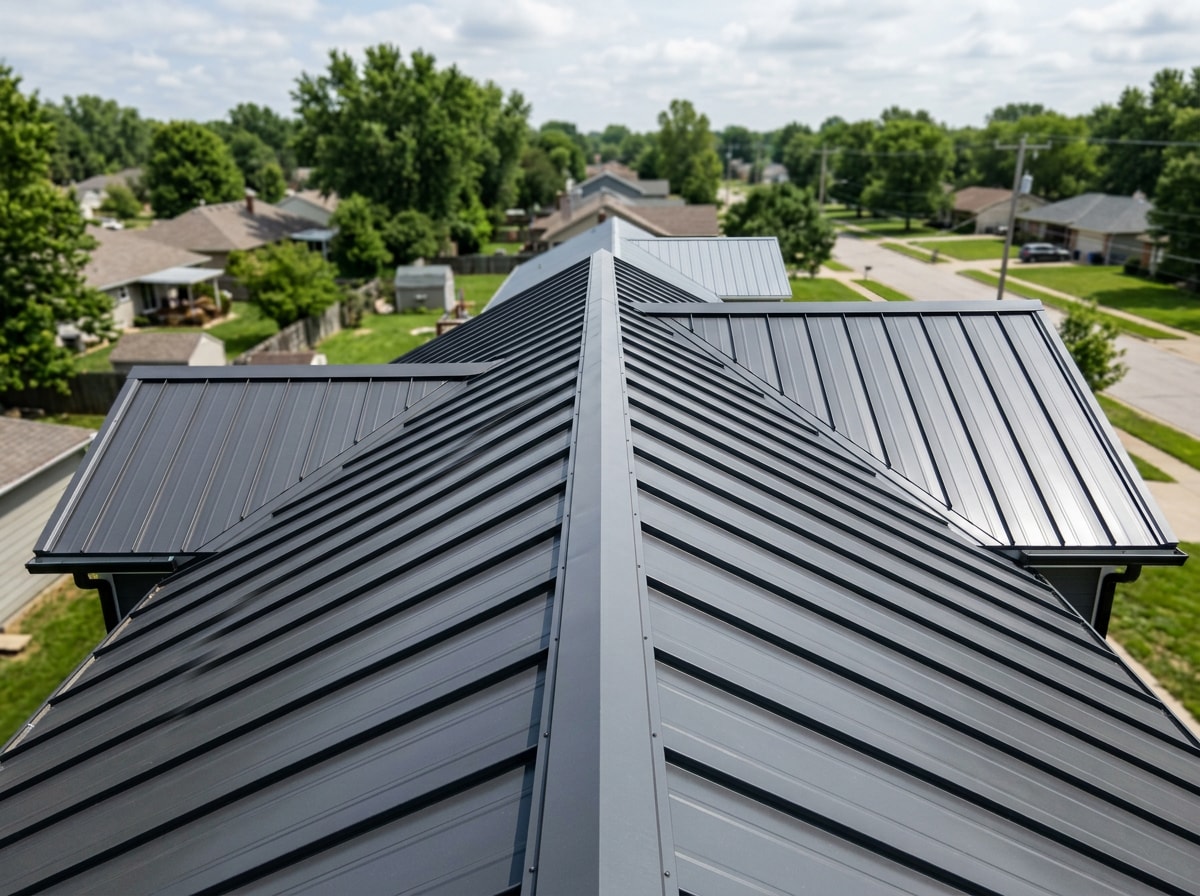
Steel roofing panels are solid-metal roof coverings, typically coated steel sheets, engineered to shed water, resist impact, and outlast traditional shingles by a wide margin. Overland Park homeowners switch for a mix of practical reasons: fewer repair calls after storms, lower summer cooling bills, and a roof that doesn't need replacing every 15 to 20 years.
Our crews have installed and repaired steel roofing across Overland Park, Olathe, and Mission Hills for years, and the pattern holds across nearly every job: homeowners who choose steel after a hail claim rarely file a second one. If you're comparing coverage by neighborhood, our Overland Park service area page has location-specific details, and our metal roof installation page covers the process end to end.
Steel Panel Types Compared: Standing Seam, Corrugated & Stone-Coated
"Steel roofing panels" is an umbrella term. Standing seam, corrugated, and stone-coated steel all use steel as the base material, but they differ in cost, appearance, and which roof shapes they fit best. Our residential roofing page has a broader comparison against other materials if steel turns out not to be the right fit.
| Panel Type | Panel Profile | Typical Gauge | Approx. Cost Range (Installed) | Best-Fit Pitch / Use Case |
|---|---|---|---|---|
| Standing Seam | Vertical raised seams, concealed fasteners | 24–26 gauge | $9–$16 per sq. ft. | 3:12 pitch or steeper; most residential homes |
| Corrugated | Wavy ribbed sheets, exposed fasteners | 26–29 gauge | $5–$12 per sq. ft. | 2:12 pitch minimum; outbuildings, garages, budget-conscious homes |
| Stone-Coated Steel | Flat or profiled panels with granule coating | 26 gauge | $8–$15 per sq. ft. | 3:12 pitch or steeper; homes wanting a shingle or tile look |
Costs vary by roof complexity, panel manufacturer, and labor rates, so treat these as planning numbers rather than a quote. For context on the national picture, This Old House's 2026 cost data notes metal roofs cost about $57,661 for a 2,000-square-foot home, depending on the metal type you choose , and while metal roofs cost significantly more upfront than asphalt shingles, they can last 40 years or more, with asphalt lasting 20–30 years comparatively, meaning metal offers better long-term value .
Standing-Seam Metal Roofing
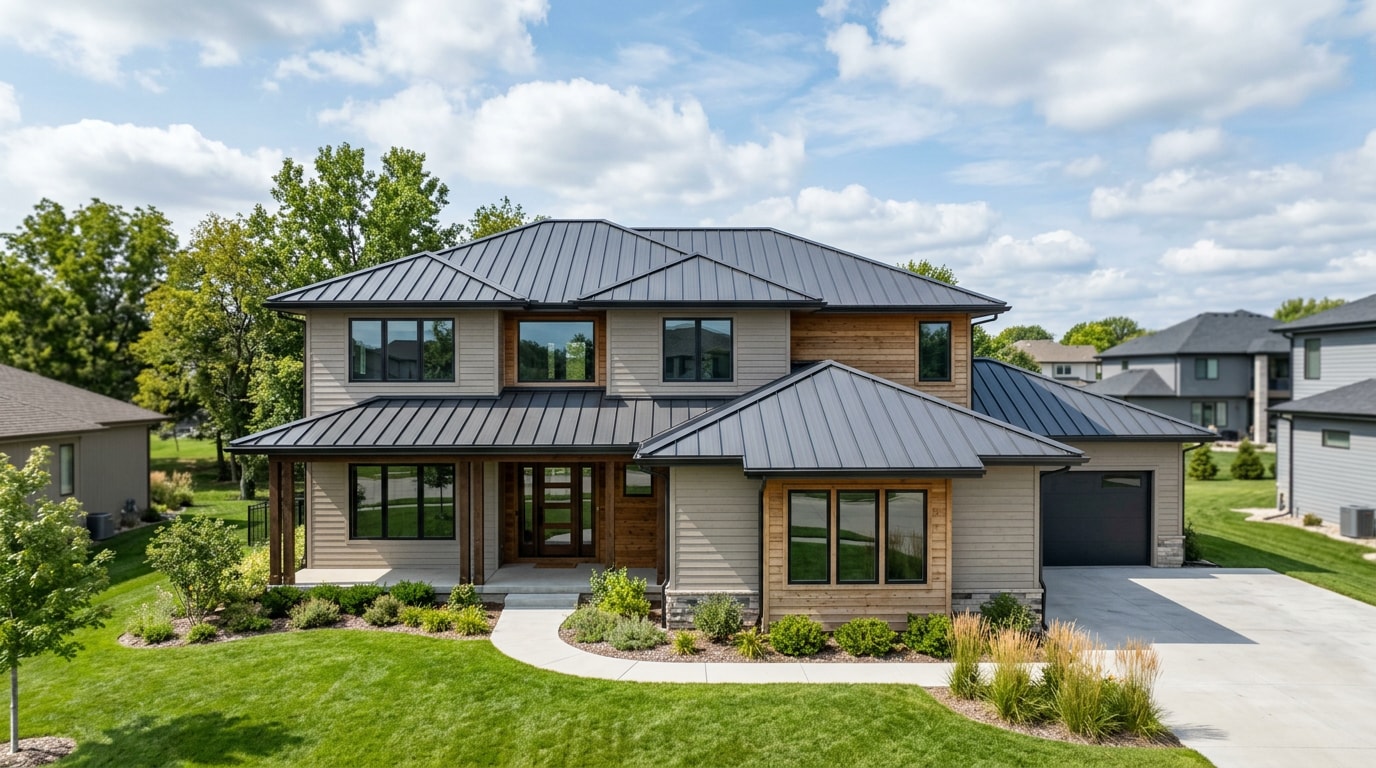
Standing seam panels lock together at raised vertical seams, hiding every fastener beneath the metal instead of exposing it to weather. That concealed-fastener design is the main reason standing seam resists leaks better than exposed-fastener alternatives, since there's no screw head sitting exposed to sun and rain cycles for years.
The look is clean and modern, with long, uninterrupted panel runs instead of visible ribs or screws. It's the most requested steel option for Overland Park homes because it pairs durability with curb appeal that doesn't broadcast "metal roof" from the street.
Corrugated Metal Roofing
Corrugated panels use a repeating wave or rib pattern that adds rigidity without adding much weight. That ribbed profile is what lets thinner steel sheets span a roof deck without flexing or oil-canning under foot traffic or hail impact.
Ribbed steel panels cost noticeably less than standing seam, which makes corrugated a popular choice for garages, workshops, and outbuildings. Some homeowners also choose it for the main house when budget is the deciding factor, though exposed fasteners mean slightly more maintenance over time.
Stone-Coated Steel Roofing
Stone-coated steel panels start with a galvanized steel core, then bond a layer of stone granules to the surface, giving the finished product the look of traditional shingles or clay tile.
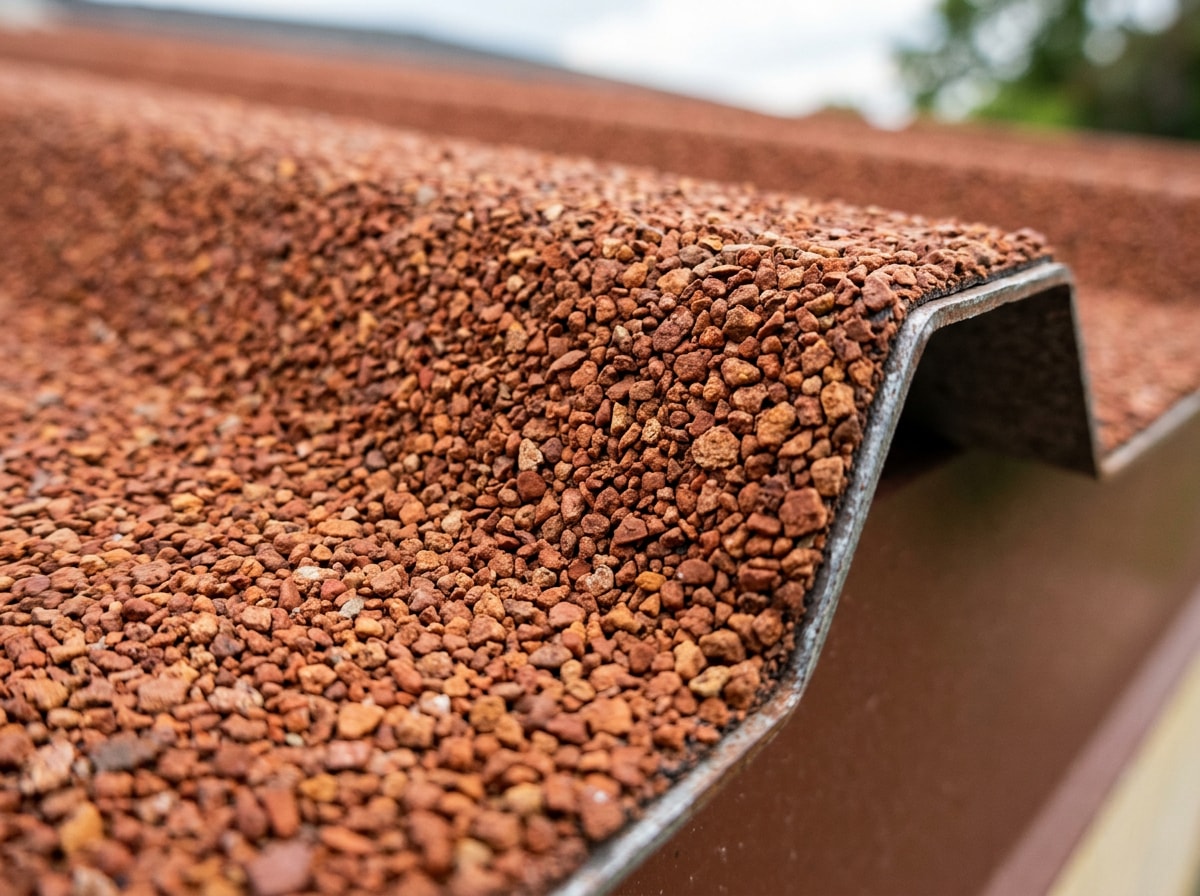
That granule layer adds real UV protection, slowing the breakdown that eventually fades and weakens exposed steel, while also improving impact resistance against hail. For homeowners who want metal's durability but aren't ready to give up the classic shingle look, stone-coated steel tends to be the middle-ground choice.
Why Overland Park Homeowners Are Switching to Steel
Kansas weather is hard on roofs, and that's where steel's advantages show up most clearly. Benefits worth weighing:
- Longevity: a well-installed steel roof commonly lasts 40+ years against 20-30 years for asphalt shingles.
- Storm resistance: steel panels hold up better under wind and hail impact than shingles.
- Lower cooling costs: reflective steel surfaces absorb less solar heat than dark shingles.
- Lower upkeep: no granule loss or curling to monitor over time.
- End-of-life recyclability: steel is largely recyclable, which appeals to homeowners weighing eco-friendliness alongside durability.
On the cooling-cost point, the EPA's ENERGY STAR program confirms that a cool roof can reduce air conditioning costs inside a building on a hot day and even cool down the air around the building, helping to reduce the heat island effect in your neighborhood . A reflective steel panel qualifies as this kind of surface, which translates into real summer savings across a Kansas cooling season. For a side-by-side against other materials, visit our residential roofing category page.
How Steel Panels Perform Against Kansas Hail, Wind & Freeze-Thaw
Overland Park sits in a region that sees straight-line winds, severe hailstorms, and sharp freeze-thaw swings every year, and steel panels are built to handle all three. Properly fastened steel roofing typically carries higher wind-resistance ratings than shingles, and thicker-gauge panels resist dents from all but the largest hail events.
Freeze-thaw cycling, which cracks and lifts asphalt shingles over time, has little effect on a solid steel panel. This isn't a minor regional quirk, it's a documented pattern: NOAA's billion-dollar disaster data for Kansas shows that from 1980-2024 there were 102 confirmed weather and climate disaster events with losses exceeding $1 billion each to affect Kansas, including 71 severe storm events, and the annual average for the most recent five years (2020-2024) is 5.6 events compared to 2.3 for the full 1980-2024 period . Severe storm frequency in this state is climbing, not holding steady, which is part of why steel has gained ground so quickly here. Performance still varies by panel gauge and installation quality, so not every steel roof handles a direct hail hit identically.
If your current roof already took damage, our hail damage roof repair and wind damage roof repair pages cover what to check for and how claims typically work.
Permits, Codes & What Installation Actually Involves
A proper metal roof installation involves more than laying panels over the deck:
- Quality underlayment goes down first to protect against moisture intrusion.
- Fastener spacing and panel overlap are sized to the roof's pitch and local wind exposure.
- Flashing gets installed at valleys, chimneys, and roof penetrations, since that's where most roof leaks actually originate regardless of material.
- Ridge caps and edge detailing finish the system, sealing the transitions where panels meet.
Local projects also need to clear Johnson County's permitting process before work begins. Per Johnson County's building codes division, all decks, roofs and new structures require a permit, and a permit is required to enlarge, alter, repair, move or demolish . Licensed, permitted work isn't optional paperwork, it's what protects a homeowner if a manufacturer warranty claim or insurance dispute comes up later. Our roof replacement page walks through how we handle permitting and tear-off scheduling on local jobs.
Is a Steel Roof Right for Your Home?
A metal roof tends to make the most sense if you're planning to stay in your home long-term, want to minimize maintenance calls, and are comparing total ownership cost rather than just the upfront bid. If a lower sticker price matters more than longevity, asphalt may still fit better for now.
It's also worth considering roof replacement sooner rather than later if your current roof already shows cracked or curling shingles, granule loss, or recent storm damage. Those are signs the existing system is failing, not just aging cosmetically. Homeowners filing an insurance claim after storm damage can also lean on our [insurance claim roof assistance]({{SITE_URL}}/services/roofing-contractor/insurance-claim-roof-assistance} page to understand what's typically covered.
Thought of as a long-term investment, steel often pencils out ahead of multiple shingle replacement cycles. For a closer look at how we've handled similar projects, our residential roof repair guide for Smithville, MO walks through the kind of storm damage decisions Kansas City-area homeowners face every season. Ready to compare options for your own roof? Request a free estimate and we'll walk your roof with you before you commit to anything.
FAQ
How Long Does a Metal Roof Last in Kansas?
A properly installed metal roof in Kansas typically lasts 40 years or more, depending on panel gauge, coating quality, and installation workmanship, compared to roughly 20-30 years for asphalt shingles. Standing seam systems with concealed fasteners tend to land at the higher end of that range compared to exposed-fastener panels.
Is Metal Roofing More Expensive Than Asphalt Shingles?
Yes, upfront cost runs higher, typically $5 to $16 per square foot installed depending on panel type. Over a 40-year lifespan, steel frequently costs less per year of service than replacing shingles two or three times.
Will a Metal Roof Rust?
Modern steel panels use galvanized or Galvalume protective coatings that provide strong corrosion resistance, so rust is uncommon when panels are properly coated and maintained. Scratches or cut edges left unsealed are the most likely spots for rust to eventually start.
Can Metal Roofing Be Installed Over an Existing Roof?
In some cases, yes, installing a metal roof over existing shingles is possible if the existing deck and structure can support the added weight and local code allows it. A full tear-off is often recommended instead when the deck shows damage or multiple shingle layers already exist.
Do I Need a Permit for a Steel Roof in Overland Park?
Yes. Johnson County requires a permit for roof replacements, and licensed roofing contractors must carry current county licensing before pulling that permit. Skipping this step can complicate insurance claims and manufacturer warranty coverage later.
Which Steel Panel Handles Hail Best?
Thicker-gauge standing seam (24-26 gauge) generally resists denting better than lighter corrugated panels, and stone-coated steel's granule layer adds a second buffer against impact. Panel gauge and installation quality both matter more than brand name when it comes to hail performance.
Visit our homepage to see the full range of roofing, siding, and gutter services we bring to Overland Park homeowners, or explore our projects page to see completed steel roof installations nearby.