Roofing ventilation and energy efficiency in Overland Park, KS are tied together more tightly than most homeowners realize until a utility bill spikes or shingles start curling early. A properly vented attic keeps conditioned air inside the living space, protects the roof deck from moisture, and helps shingles reach their full service life. This guide breaks down how attic airflow actually works, what fails first, and which fixes are worth paying for.
What Is Attic Ventilation?
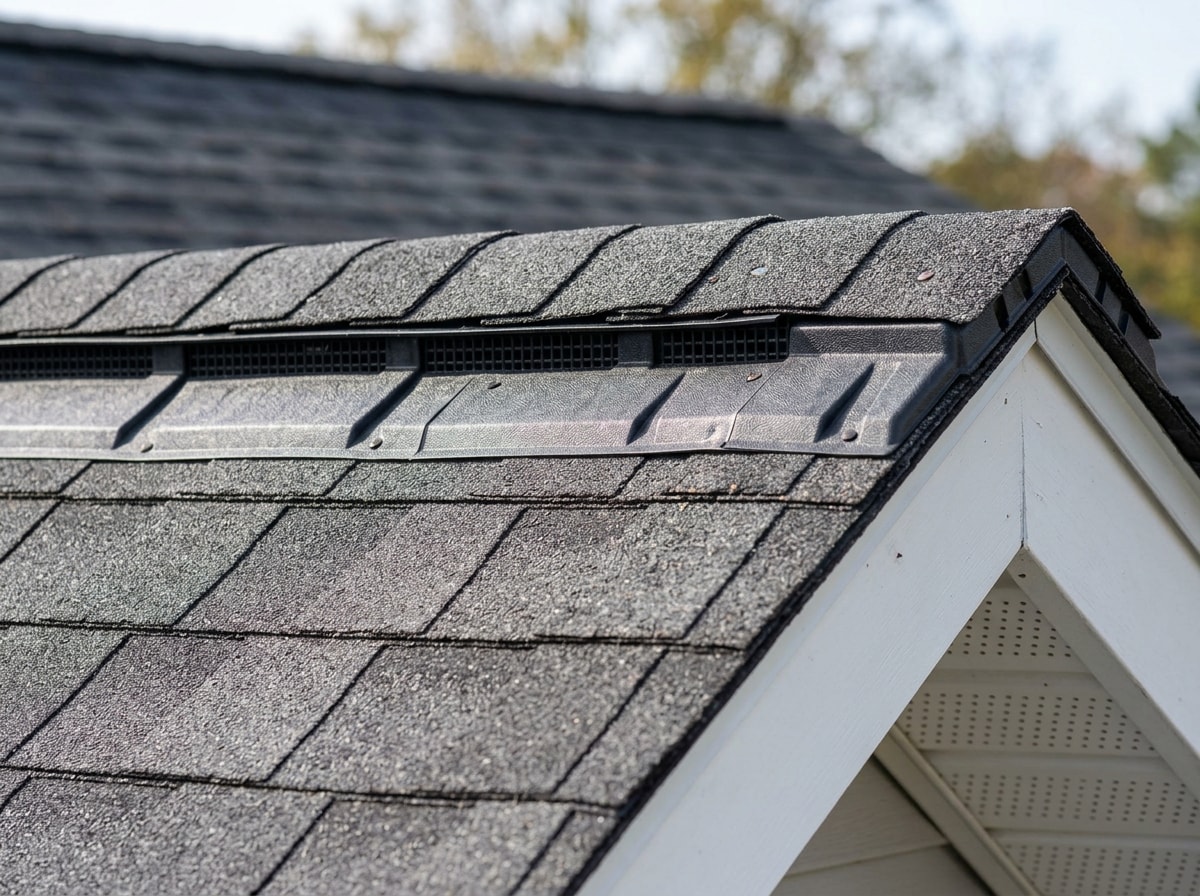
Attic ventilation is the continuous exchange of air through an attic space. Fresh air enters through intake vents at the soffits, moves across the attic floor, and exits through exhaust vents at the ridge or gables. This loop keeps attic temperature and humidity closer to outdoor conditions year-round.
Without it, heat and moisture build up and strain both the roof system and the home's energy use. Homeowners researching their Overland Park, KS property's roof often find ventilation is the missing piece behind rooms that never cool down properly.
Why Attic Ventilation Drives Energy Efficiency in Overland Park's Climate
Overland Park sits in IECC Climate Zone 4A, a mixed-humid zone defined by hot, humid summers and cold winters with real heating demand. Overland Park's local building codes recognize Climate Zones 4A and 5A , which is exactly the kind of swing that makes ventilation a year-round job rather than a seasonal checkbox. A system sized only for summer heat, or only for winter moisture, leaves the home exposed for the other half of the year.
How Poor Ventilation Damages Your Roof and Your Bills
When ventilation fails, an attic turns into a slow-cooking oven on summer afternoons, forcing the air conditioner to run harder to keep upstairs rooms comfortable. In winter, the same stagnant air traps moisture instead of heat.
Warm household air rises into the attic and condenses on the cooler underside of the roof sheathing, creating the damp wood conditions mold needs to take hold. That trapped heat also melts snow unevenly, and the runoff refreezes at the colder eaves, building the ice dams that push water back under shingles.
Benefits of Proper Attic Ventilation
Balanced airflow pays off on the roof and on the utility bill. Heat and moisture are two of the fastest ways to age a roof, and ventilation reduces both.
EPA estimates that homeowners can save an average of 15% on heating and cooling costs, or about 11% on total energy costs, by air sealing and adding insulation in attics and other unconditioned spaces , work that typically goes hand in hand with correcting a ventilation imbalance. Proper airflow also discourages the damp conditions mold needs to grow and protects insulation performance, since wet insulation loses much of its R-value.
For a closer look at options sized to your roof, explore roof ventilation installation or our dedicated attic venting services.
Signs Your Attic May Have Poor Ventilation
A quick self-check reveals whether an attic is working for a home or against it. Noticing two or more of these together is a strong sign the system needs attention:
- Energy bills that creep higher without an obvious cause
- A musty attic smell or visible mold on rafters and sheathing
- Peeling paint, warped wood, or stains near the roofline
- Ice dams forming along the eaves after snow
- Upstairs rooms that stay noticeably hotter than the rest of the house
One symptom alone might not mean much, but two or more together is worth a professional look before the damage spreads.
Types of Attic Ventilation Systems
There's no single best vent for every roof. The right fit depends on roofline shape, attic volume, and how much intake area the soffits can realistically provide.
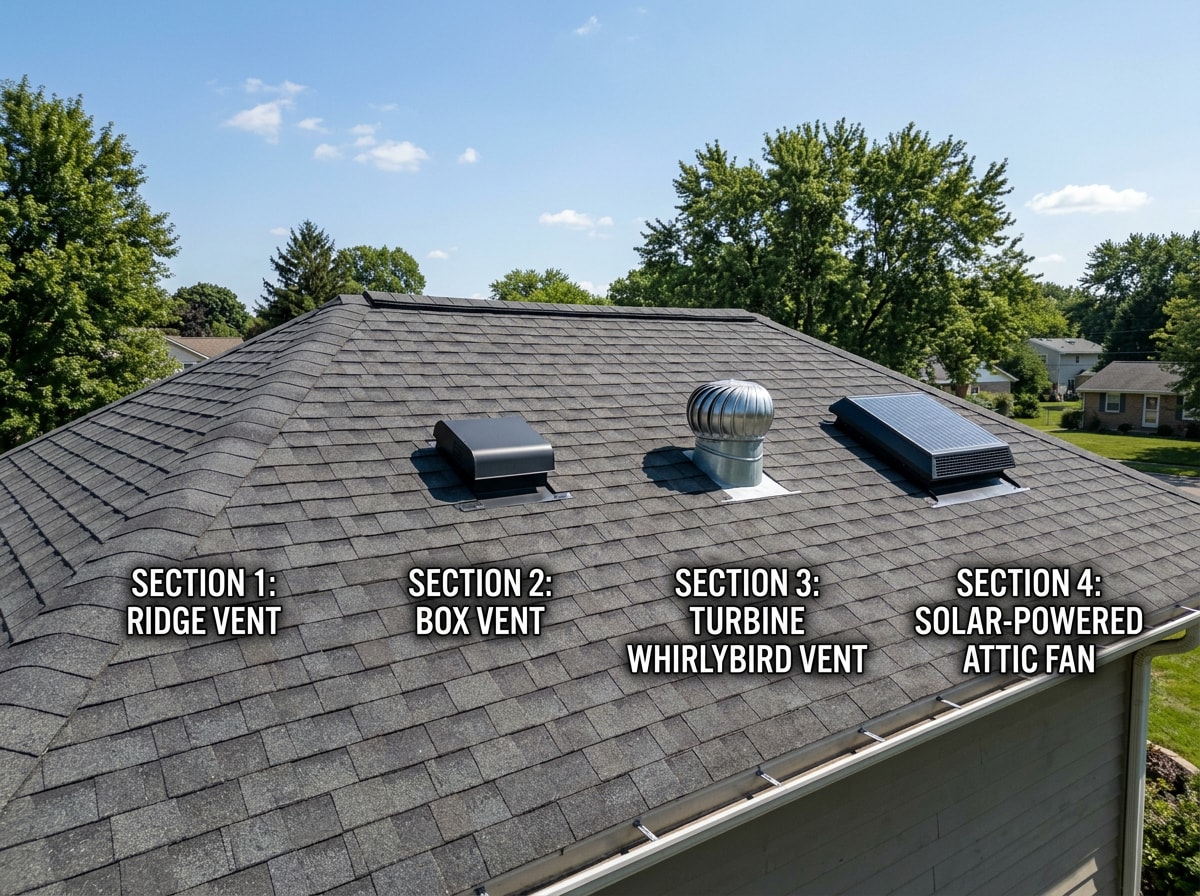
| Vent Type | Typical Cost | Maintenance | Noise | Best-Fit Roof |
|---|---|---|---|---|
| Ridge Vents | Moderate | Very low | Silent | Long, simple ridgelines |
| Box Vents | Low per unit | Low | Silent | Cut-up or complex rooflines |
| Turbine Vents | Low-moderate | Occasional check | Slight hum in wind | Roofs needing a ventilation boost |
| Solar Attic Fans | Higher upfront | Low | Minimal hum | Roofs with weak passive airflow |
Ridge Vents
Ridge vents work best on simple gable or hip roofs with a long, uninterrupted ridgeline, since that length provides enough net free area to exhaust the attic's full air volume. They run along the roof's peak and depend entirely on a clear intake path below. Without open soffit vents at the eaves, even a well-installed ridge vent has nothing to pull from.
Box Vents (Static Roof Louvers)
When a roofline is too cut-up for one continuous ridge vent, box vents, also called static vents or turtle vents, offer a flexible alternative. These are individual, weather-shielded roof louvers installed near the peak that let hot air escape through simple convection. Spacing several across a roof covers zones where airflow might otherwise stagnate, a common fit for homes with dormers or hips breaking up a straight ridge.
Turbine Vents (Whirlybirds)
Turbine vents are wind-driven and add nothing to the home's energy load, since they have no motor or electrical draw. Spinning turbines can meaningfully boost airflow on breezy days. That said, pairing turbines with existing ridge vents can backfire, pulling air from the ridge vent instead of the soffits and reducing the system's overall ventilation rate.
How Much Ventilation Does Your Attic Actually Need?
Building codes don't leave this to guesswork. The minimum net free ventilating area required is 1/150 of the area of the vented space , with an exception: that minimum drops to 1/300 if a Class I or II vapor retarder is installed on the warm-in-winter side of the ceiling and 40 to 50 percent of the required ventilating area sits in the upper portion of the attic, no more than 3 feet below the ridge . In practice, this means a 1,500-square-foot attic needs roughly 10 square feet of combined intake and exhaust under the standard ratio, split as evenly as the roofline allows.
Common Ventilation Issues in Overland Park Homes
Two issues show up repeatedly in older Overland Park homes: inadequate intake and mixed vent types. Many houses built decades ago lack enough soffit vent area, so exhaust vents have nothing to pull from even when installed correctly. Mixing ridge vents with turbines or box vents creates competing exhaust points instead of one clean airflow path.
On inspections across Johnson County, our crews at Redemption Roofing USA regularly find insulation packed right up against the soffit vents in homes built before the early 2000s, which quietly chokes off intake even though the vent openings look fine from the ground.
Homeowners can get a rough read with two checks. Look at the soffits from outside: are the openings clear, or painted over and blocked by insulation? Then place an inexpensive thermometer in the attic on a hot afternoon. If it reads far above outdoor temperature, airflow is likely insufficient or imbalanced somewhere in the system.
If either check raises a flag, a roof inspection or attic venting repairs visit will confirm what's actually happening above the insulation line.
Solar Attic Fans: Helpful Boost or Unnecessary Add-on?
Solar attic fans work best as a supplement to passive ventilation, not a replacement for it, adding mechanical power to a system that already has adequate intake and exhaust.
Improves Airflow
By actively pulling hot air out rather than relying on wind or convection alone, a solar fan can noticeably ease the load on the HVAC system during peak summer afternoons.
Prevents Ice Damming
The same fan that helps in summer can help in winter. Running a solar attic fan during cold months narrows the temperature gap between the attic and outside air, keeping the roof deck closer to ambient temperature. A cooler attic is less likely to melt snow unevenly, lowering the odds of ice dams at the eaves.
When a Powered Fan Isn't the Right Call
Not every fan is a good idea, and this is where a lot of local guides stop short. Research on electric attic ventilation fans has found they often cause more overall energy loss than they save and can increase moisture issues in winter, which is why ENERGY STAR does not recommend them . The risk is highest when soffit intake is already blocked, because a powered fan with nothing to pull from can instead draw conditioned air out of the living space below, raising cooling costs instead of lowering them. Solar-powered units sidestep some of this risk since they only run when the sun is out and soffit intake is adequate, but they're still not a fix for a system that's fundamentally out of balance.
Explore attic venting installation to see whether a fan fits a specific roof or whether passive upgrades alone will solve the problem.
Keeping Ventilation Working Long-Term
Ventilation isn't a one-time install and forget. Insulation settles, debris collects in soffit screens, and storm damage can knock louvers loose without an obvious leak to signal it. Pairing a ventilation check with routine roof maintenance and tune-ups catches these small problems before they turn into a mold remediation bill or a premature reroof. If a new roof is already on the horizon, our guide to steel roofing panels in Overland Park, KS covers how material choice interacts with ventilation needs on metal roofs specifically.
FAQ
How much does attic ventilation cost in Overland Park, KS?
Costs vary based on home size and the ventilation type needed. Basic upgrades, like adding soffit vents, can run a few hundred dollars, while a full ridge-and-soffit system costs more. A free roofing estimate is the most reliable way to get an exact number for a specific roof.
How much ventilation does my attic actually need?
Code sets the floor at 1 square foot of net free vent area for every 150 square feet of attic floor space, split between intake and exhaust. That ratio can drop to 1/300 only when the attic has a proper vapor retarder and balanced upper and lower vent placement. A measurement during an inspection confirms where a specific attic stands against that minimum.
Do I need attic fans if I already have ridge vents?
Not always. If intake and exhaust are already balanced, a fan can be redundant and may even disrupt airflow. Homes with weak natural airflow or complex rooflines, though, can still benefit from a supplemental fan.
How do I know if my attic is ventilated properly?
A roofing professional can measure airflow, inspect vent placement, and check for trapped heat or moisture. Homeowners can also watch for musty odors, mold, unusually high energy bills, or ice dams forming each winter.
Can poor attic ventilation damage my roof?
Yes. Excess heat and trapped moisture cause shingles to age faster than their rated lifespan and can lead to sheathing rot, mold growth, and broader roof damage over time. Addressing ventilation issues early usually costs far less than repairing the damage they cause.
Are powered attic fans a good idea?
Not always, and sometimes they do more harm than good. If soffit intake is blocked, a powered fan can pull conditioned air from the home instead of outside air from the soffits, raising energy costs instead of lowering them. A ventilation assessment before installing one is the safer route.
If an attic is running hot, holding onto moisture, or driving up the cooling bill, the fix is usually a few targeted vents rather than a full roof overhaul. Contact Redemption Roofing USA for a free estimate, and our licensed crew will measure the attic, check the existing intake and exhaust balance, and recommend the system that actually fits the roof. You can also browse recent projects or start from the homepage to see the full range of roofing and exterior services we offer across the Kansas City metro.